Showing posts with label characteristics. Show all posts

Sunday, April 16, 2023

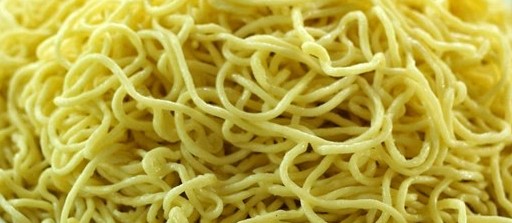
Characteristics of yellow alkaline noodles

Noodles can be classified as white (containing salt) or yellow (containing alkaline salt), depending on the absence or presence of alkaline salt in the formula. Yellow alkaline noodles are of considerable importance owing to their brightness and yellow color tone. They are famous in South East Asia and now taking share in other parts of the globe too.

Asian customers prefer bright yellow alkaline noodles that retain a stable color for 24–48 hour after preparation and perceive red or dull grey colors as undesirable.

Noodles nutritional quality depends on wheat quality, basic flour specifications, ingredient functions, and production variables according to the type of noodles process. Yellow alkaline noodles are prepared from wheat flour along with water and alkaline salt as their basic ingredients and are usually parboiled. In this regard, noodles prepared with the addition of egg (wantan noodles) are also popular which are parboiled using steam and dried.

The noodle properties are firm, chewy, springy texture and bright yellow appearance due to the natural flour flavonoid pigments at alkaline pH. Yellow noodles are typically made by adding alkaline salt to the ingredients. The alkaline salt added imparts the unique features of Chinese noodles with pH 9.0-11.0 , whereas the yellowness of the noodles is produced when the flavones react with the alkaline water.

Yellow alkaline noodles are usually sold in wet form containing moisture contents in the range of 50–60 % (final product). Chinese noodles are made from wheat flour that should contain protein contents in the range of 10–13 % but preferable protein contents are in the range 11–12 %.

In the interior of alkaline noodles, the inherently low-swelling starches of hard wheats are further restricted from swelling by the carbonate salts. The alkaline salts toughen the dough, affect the pasting properties of starch by retarding gelatinization and increasing paste viscosity, inhibit enzyme activity, and suppress enzymatic darkening.

Flour used for yellow alkaline noodles usually contains 11.0–13.5 % proteins. The gluten proteins constitute∼ 80 % of proteins present in wheat flour. They are further comprised of two districts types, that is, gliadin and glutenin. The gliadin fractions are important in formation of disulfide bonds thus rendering firmness against aggregate formation, while glutenin are elastic in nature.

High quality yellow noodles should be free from discoloration, having symmetrical dimensions, should not be sticky after being cooked, as well as showing sufficient firmness and springiness.
Characteristics of yellow alkaline noodles
Sunday, October 11, 2020

Cooking Noodles

Noodles are a type of pasta that is normally produced from flour, rather than semolina or farina, and noodles contain salt in addition to flour and water.

Noodle products as basic foods are growing with the requirements of modern life. Furthermore, sensory attributes, which are well accepted by consumer, their low cost, ease of cooking and long shelf life compared with other foods have made them popular.

Noodles and noodle products are usually made from common wheat fine flour and generally prepared by a process of sheeting and cutting as opposed to pasta products, which are processed from coarse semolina milled from durum wheat by extrusion.

The appeal of noodle among consumers has made this food product a potential promoter for production of functional foods. Quality factors which are important for instant noodles including color, flavor, and texture, cooking quality, rehydration rates during final preparation, and the presence or absence of rancid taste after extended storage.

During boiling, the starch noodles absorb water, which the internal starch re-gelatinize. The starch noodles begin swelling, slowly becoming soft, elastic, smooth, and transparent after heating. Throughout this processing, small debris and soluble components of starch noodles continuously enter the water due to swelling, constituting the “cooking loss”.

Texture is one of the critical properties in considering quality evaluation of noodles. Elasticity, adhesiveness and firmness are the main parameters that are measured in texture evaluation of noodle. Japanese people consumed noodles with smooth, soft and elastic texture but Chinese and Korea preferred firmer texture.
Cooking Noodles

Friday, November 29, 2019

Characteristics of buckwheat noodles

Though some Asian-style noodles are wheat-based, many others are made from ingredients such as rice flour, potato flour, buckwheat flour, corn flour and bean, yam or soybean flour.

Buckwheat flour is gluten-free which makes it a good choice for anybody with gluten sensitivities or celiac disease. Buckwheat is not a cereal grain but it is actually a fruit seed that is related to rhubarb and sorrel.

Noodles containing buckwheat are called soba. These noodles are typically light brown or grey in colour with a unique taste and flavour. Soba noodles are native Japanese noodles made of buckwheat flour. Like pasta, soba noodles are available in dried form in supermarkets, but they taste best if freshly made by hand from buckwheat flour and water.

Buckwheat noodles, or soba, are long, thin, brownish noodles made from a composite of buckwheat flour (soba-ko) and wheat flour(komugi-ko). They have a unique flavour and texture and are served plain or in soup.

Soba is particularly favored for its flavor and texture and the nutritional advantages associated with its rich protein, mineral, and functional contents, including rutin. Buckwheat flour contains about 10% protein by weight.
Characteristics of buckwheat noodles

The Most Popular Posts

Articles from around the world